Why Early Childhood Development Matters More Than Marks
Every report card season, millions of Indian parents hold a sheet of paper and feel their stomach tighten. Is the score high enough? Did their child do well enough? Are they ahead of the class?
Here is the uncomfortable truth. That report card tells you almost nothing meaningful about how your child is actually developing. It tells you how well a 6-year-old performed on a test on a particular day. It does not tell you whether they are curious, confident, communicative, or capable of solving problems. It does not measure the skills that will matter most in their life.
The first 8 years of a child's life are the most neurologically significant years they will ever experience. The brain develops faster between birth and age 8 than at any other point in human life. Understanding how the brain develops in the first 6 years makes this even clearer. Marks are a measurement. Development is the foundation that makes every future measurement possible.
What Early Childhood Development Actually Means
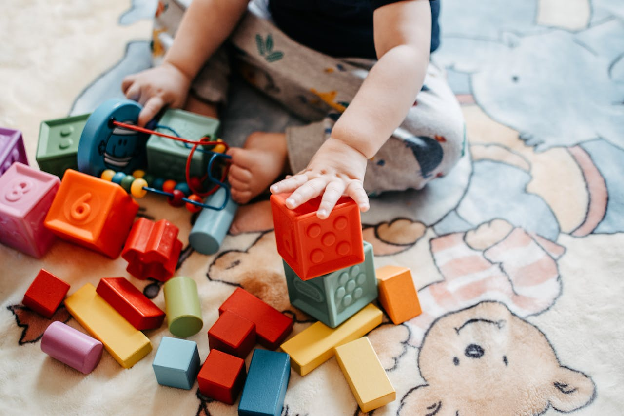
Early childhood development is not a single skill or subject. It is the full range of growth that happens across multiple dimensions during the first 8 years of life.
Cognitive development includes language, early literacy, problem-solving, and the ability to focus and think. But it also includes curiosity, the drive to explore and question, which is the actual engine behind all learning. A child who asks "why" relentlessly is showing outstanding cognitive development. That trait is worth far more than a perfect score on a colouring test.
Language development is equally critical. Research shows that children who are regularly talked to, read to, and engaged in conversation have heard millions more words by age 3 than children from less language-rich environments. This gap has measurable effects on vocabulary, reading ability, and academic performance that persist well into secondary school.
Social and emotional development is the domain most frequently ignored by mark-focused parents and most consistently highlighted by researchers. The ability to manage emotions, build relationships, cooperate, and persist through difficulty predicts adult success more reliably than early academic scores. A long-term study tracking 700 children for 20 years found that kindergarten social skills - one of the 5 skills every child should learn before age 5 - were a stronger predictor of adult employment and wellbeing than academic test scores from the same period.
Creative development, including art, music, and imaginative play, builds neural pathways associated with flexible thinking, emotional processing, and innovation. These domains do not appear on most school report cards. They are not less important because of that.
The Problem with Prioritising Marks Too Early
Marks have a place in education. The problem is when they become the primary measure of a young child's worth and progress, particularly before age 8 or 9.
When marks dominate, children begin to optimise for the test rather than genuine understanding. A child who memorises answers scores full marks today but retains nothing next month. A child who truly understands will carry that knowledge forward for years.
The pressure to perform academically at a very young age creates anxiety. Rising rates of academic anxiety in Indian children as young as 6 and 7 have been well documented. Anxiety at this age does not improve performance. It suppresses curiosity, reduces risk-taking, and narrows a child's engagement with learning to whatever they think will be judged.
Marks-first parenting also crowds out the activities that actually drive development. Time spent drilling for tests is time not spent in free play, creative exploration, physical activity, and conversation. Research on play-based vs traditional learning confirms this. A child building a fort out of cushions is developing spatial reasoning, negotiation, and creative problem-solving. A child memorising worksheet answers is developing only the ability to memorise worksheet answers.
Genuine academic ability grows out of strong foundational development, not the other way around. A child pushed to perform before those foundations are built may produce impressive marks at age 6 and struggle profoundly at age 12.
The 4 Foundations Every Child Needs Before Age 8
Language and Literacy
Rich oral language is the single most powerful predictor of future reading and academic success. Children need to hear and use complex language daily through conversations, stories, and questions that require more than a yes or no answer.
Early literacy, including phonics and a genuine love of books, belongs here. Not as a pressure point but as a joyful daily habit. A child who loves language will become a strong reader. No amount of drilling creates that love. Good teaching does. You can explore how structured English and phonics learning works at nino.in/courses.
Emotional Regulation and Resilience
A child who can manage frustration, recover from disappointment, and persist through difficulty has a developmental advantage that no mark can measure. Emotional regulation is built through experience, through being allowed to feel difficult emotions safely, and through gradual exposure to manageable challenges.
The experience of trying something difficult, getting it wrong, trying again, and succeeding is the sequence that builds resilience. Getting the right answer on the first attempt, which is what marks reward, does not build resilience at all.
Curiosity and Intrinsic Motivation
Children are born curious. By age 4, most ask an average of 200 to 300 questions per day. In high-pressure academic environments, that number drops dramatically by age 10. Curiosity is not lost naturally. It is trained out of children who learn that the only questions that matter are the ones on the test.
Protecting curiosity is one of the most important things a parent can do. Follow your child's interests even when they seem unrelated to school. An obsession with drawing builds fine motor skills, spatial reasoning, patience, and self-expression. An obsession with dinosaurs builds vocabulary, classification, and the habit of deep investigation. All of it matters.
Creative Expression
Art, music, and creative play are developmental necessities, not extras. Physical activity supports brain development, attention, and emotional regulation. Children who move regularly focus better when they sit down to learn. Creative activities develop neural pathways associated with flexible thinking and innovation, precisely the capacities that will matter most in your child's adult life.
Art education is dramatically undervalued in most Indian households. Drawing and painting build fine motor skills, visual-spatial intelligence, patience, and the ability to translate internal ideas into external expression. These are not soft skills. They are foundational human capacities. See how Nino approaches creative learning at Nino.
How Indian Parents Can Shift the Focus
Shifting from marks-first to development-first does not mean abandoning academic expectations. It means expanding what you pay attention to and what you celebrate.
Celebrate effort and process, not just outcomes. "I saw how hard you worked on that" is more developmentally powerful than "Great marks!" It teaches children that effort matters, which is the belief that sustains learning through difficulty.
Ask different questions after school. Instead of "What marks did you get?" try "What made you curious today?" or "Was there anything that felt difficult?" These questions signal that curiosity and struggle are valued, not just performance.
Create space for unstructured play every day. Children at play are practising emotional regulation, creative thinking, physical coordination, and social negotiation simultaneously. Protect that time rather than filling every hour with structured activities.
Read together daily, for enjoyment not just practice. A child who loves books will become a strong reader on their own. No drilling required.
Marks Will Come. Development Cannot Wait.
A child who scores 95% at age 6 and has been drilled to get there has not necessarily been well-served. A child who scores 75% at age 6 but is deeply curious, emotionally secure, loves reading, and works well with others is extraordinarily well-positioned for everything that comes next.
The marks-focused years are long. Primary school, secondary school, board exams, entrance tests. There will be plenty of time for marks to matter. But the window for building the foundations that make those marks sustainable is short. It closes faster than most parents realise.
The most important question is not "What did your child score?" It is "Who is your child becoming?"
Nino's courses in Phonics, English Speaking, and Art are built around this understanding. Every class is designed to develop the whole child, not just prepare them for the next test. Visit nino.in to learn more or book a free trial class.
Frequently Asked Questions
At what age does early childhood development end?
Most researchers define early childhood as birth to age 8. This is when the brain is most plastic and foundational skills across all developmental domains are established. Development continues beyond 8, but the first 8 years are uniquely powerful because experiences during this period shape the brain more profoundly than at any later stage.
Does focusing on development mean ignoring academics?
Not at all. Strong development is what makes academic success sustainable. Children with rich language skills, genuine curiosity, and good emotional regulation naturally perform well academically. The goal is not to abandon academics but to ensure the foundations are solid rather than chasing marks at the expense of the underlying capacities that make real learning possible.
My child's school is very marks-focused. What can I do as a parent?
You cannot change the school system, but you can create a counterbalance at home. Prioritise daily reading for pleasure, unstructured play, creative activities, and open conversation. Choose any additional learning, whether online classes, sports, or art, that develops the whole child rather than just drilling for tests. The home environment has powerful influence even when school is heavily marks-focused.
My child is already 7 or 8. Have I missed the window?
No. While the earliest years are uniquely powerful, the brain remains highly responsive throughout childhood. Children at age 7 or 8 who receive enriched language experiences, strong structured learning, and emotionally supportive environments make significant developmental gains. It is never too late to invest in your child's development. Starting today is always better than waiting.
Is art really important for development or just a hobby?
Art is far more than a hobby for young children. Regular engagement with art activities builds fine motor skills, spatial reasoning, patience, and the ability to communicate ideas. Research has found that children who receive regular arts education show measurably better performance in mathematics and reading comprehension compared to peers without it. Creative activity is an academic investment, not a break from academics.